
About this Work Stream
The purpose of the sessions in this Workstream is to contribute to a swift transition beyond fossil fuels by enabling participants to
- See their contribution in the context of the whole ecosystem of initiatives
- Better understand strategic leverage points for shifting structures to concentrate efforts
- Find ways for the new Santa Marta Process to support and strengthen other initiatives.
Agenda
10:00 – 13:00
Session 1
In this opening session we will inquire together into what the Santa Marta Process can add to the fossil fuel phaseout landscape:
- Acknowledge diverse initiatives contributing to the wider goal, their strengths and limitations
- Shift from multilateralism (everybody joins) to plurilateralism (coalition of the willing)
- Better understand the role of the Santa Marta process: umbrella, peer or boost for other initiatives?
13:00 – 13:30
Lunch
13:30 – 16:00
Session 2
Building on Session 1, we will build on Session 1 as we uncover transition pathways with the 3 Horizons framework,
- Acknowledging how all three qualities of the future are at play in the present enables a swifter transition to desired future(s);
- Developing a list of early warning signs to be alert to, and identifying H2+ complementary activities
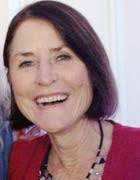
Megan Seneque
Associate with the Presencing Institute
Megan Seneque is currently Visiting Fellow with the Crawford School of Public Policy, Australian National University; Honorary Research Fellow with the Susanna Wesley Foundation, University of Roehampton; Research Associate with the Faculty of Theology and Philosophy, Australian Catholic University.
She is an Associate with the Presencing Institute, Cambridge, MA, a global organisation building capacity for social, ecological and systemic regeneration; and with Orange Compass, an Australian-based organisation that works with change makers on their journey to transform systems and shape more just, equitable futures. She has a PhD in Systems Science from the Centre for Systems Studies, University of Hull.
Megan’s career as an academic and as a social process and development professional began in South Africa at the University of Kwa-Zulu Natal, where she was involved in long-term work on curriculum transformation in the transition to post-Apartheid South Africa. Megan was lead designer and Founding Director of a Leadership Centre at UKZN. All research and teaching programs were framed in the context of application in order to address the complex problems facing the continent, and to theorise leadership for just, equitable development.
In her work across the private, public, education and NGO sectors – in Europe, Asia, Africa, Australia, the UK and other global contexts – Megan has continued to bring together research as systemic intervention, supported by systemic design and facilitation. Current and recent projects include accompanying the Community and Social Interventions division of the World Health Organisation on developing and practising a new research paradigm in relational community engagement, with prototypes in 4 countries in the Western Pacific Region. These were intended to create the conditions for systemic change and relational health and flourishing. She has recently completed a 2-year praxis-based initiative, funded by the Templeton World Charity Foundation, building a Network of Networks for a global flourishing ecosystem. The process of intervention itself brings together diverse knowledge systems for co-engaged and transformative flourishing research.
Agenda
10:00 – 10:15
Welcome
10:15 – 10:20
Explanation of agenda and format of debate
10:20 – 11:20
Proposals to reduce economic dependence from fossil fuels in the energy sector (transport, industrial policies, heating, cooling and domestic consumption).
11:20 – 12:20
Proposals to reduce economic dependence from fossil fuels in other sectors (agrifood systems, global value chains, plastic, clothes, petrochemicals, etc.)
12:20 – 14:00
Lunch (corridor of the Mar Caribe Building)
14:00 – 15:00
Proposals to protect the rights of Indigenous peoples, traditional communities, peasants, Black people, quilombolas and fishing communities, and to guarantee their right to common land and territorial self-determination.
15:00 – 16:00
Proposals for rebuilding environmental regulation, ending, restoring and repairing existing sacrifice zones and avoid the creation of new ones be it by fossil fuels or under the decarbonisation agenda.
16:00 – 17:30
Plenary
9:00 am – 11:00 am
( 2 Hours )
Breakout startups (group 1)
Stephanie Lawrence
Co-founder, Common Goal
Room NBD – Grand 9
6:45 am – 8:00 am
( 1.15 Hours )
Early Morning Run/Walk
Eric Cantona
Global Ambassador
Grand Park Avenue
11:25 am – 12:25 am
( 1 Hour )
Breakout startups (group 2)
John Stamper
Editor EMEA
Room NBD – Grand 8
2:20 pm – 4:00 pm
( 1.40 Hours )
Reinventing your brand
George Spielberg
CEO & Creative Director
Room NBD – Grand 8
4:30 pm – 6:00 pm
( 1.30 Hours )
Thinking outside the box
Laura Norson
CEO & Co-founder
Room NBD – Grand 8